
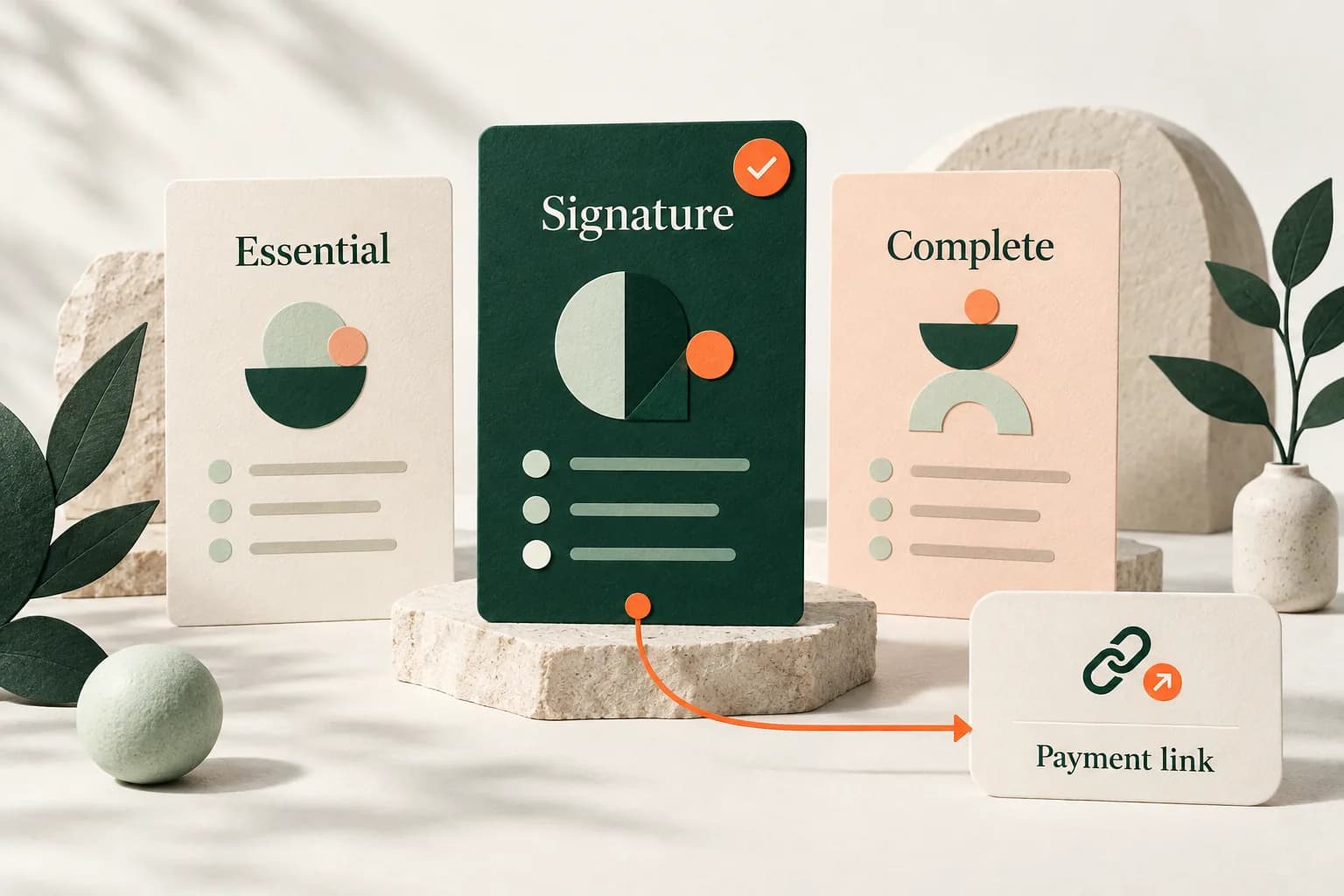
A social media marketing proposal explains which channels you will run, what content you will deliver each month, how you will handle comments and approvals, how you will report, and what it costs. Start from a template, then make the channels, quantities and response times specific to this client.
Below are Propovo’s social media templates, the sections every social proposal needs, a filled monthly scope and the mistakes that make clients hesitate.
Start from a social media proposal template
Each template opens as an editable proposal with sections for the client’s channels, content plan, community management, reporting and monthly plans. Customising one needs a Propovo account; the trial is free for 14 days with no card required.
Social Media Management
For monthly organic social: content calendar, posting, community replies and reporting.
Paid Social and Meta Ads
For paid campaigns on Facebook and Instagram, with ad spend kept separate from your fee.
Short-Form Video Retainer
For a monthly run of Reels, TikToks and Shorts, from shoot to edit.
Influencer Campaign Management
For creator campaigns: shortlist, briefs, contracts, approvals and reporting.
What to include in a social media proposal
| Section | What it answers | Make it specific |
|---|---|---|
| Where the client is today | Which channels they use and how they perform. | A short review of the last 90 days per channel. |
| Goal | What the client wants social to do for the business. | One goal per channel, in the client’s words. |
| Channels | Which platforms are included, and why. | Leave out channels that do not fit the audience. |
| Content | What you publish each month. | Formats and quantities, such as 12 Reels and 8 carousels. |
| Community | Who replies to comments and messages, and when. | Response hours and an escalation route for complaints. |
| Approvals | How the client reviews content. | One monthly calendar review and a turnaround time. |
| Reporting | Which numbers you report and how often. | Platform analytics plus website visits from social. |
| Pricing | Your monthly fee and what it excludes. | Keep ad spend, production and tools separate. |
Filled example: monthly scope for a consumer brand
The example below is fictional. It shows the level of detail that lets a client compare your offer with another agency’s.
| Channel | Monthly content | Community | Reported monthly |
|---|---|---|---|
| 12 Reels, 8 carousels, Stories on posting days | Replies on weekdays within four working hours | Reach, engagement rate, followers, link clicks | |
| TikTok | 12 short videos from one half-day shoot | Replies on weekdays within four working hours | Views, average watch time, followers |
| 8 posts, including 4 founder posts | Replies to comments within one working day | Impressions, engagement rate, website visits |
Each month we plan, produce and publish [number] posts across Instagram, TikTok and LinkedIn from one half-day content shoot. You approve the calendar in a single review by the [day] of the previous month. We reply to comments and messages on weekdays, 9 am to 6 pm, and escalate complaints to [contact] within one hour.
The monthly fee excludes ad spend, which is paid directly to the platforms, and any paid tools or licensed music beyond our standard library.
How to price social media in a proposal
Monthly retainer by volume
Price on channels and posts per month. It is easy to compare and easy to change as the client grows.
Tiered plans
Offer two or three plans that differ by channels, content volume and production, not by promised follower counts.
Paid social as a separate line
Charge a management fee for ads and keep the ad budget in the client’s own account.
State a minimum term and the notice period. A three-month minimum is common because the first month is spent on strategy, a shoot and the first calendar.
Mistakes that make social proposals hard to sign
Promising followers or sales
Platform algorithms change. Commit to the content, response times and reporting instead.
Every channel for every client
Recommend the channels the audience actually uses and explain why others are left out.
Vague volume
“Regular posting” cannot be compared. Give quantities per channel per month.
No approval process
Agree who approves content and how fast, or posts will sit waiting.
Mixing fees and ad spend
Show your management fee and the client’s ad budget as separate amounts.
Customise the template in Propovo
Open the template, add the client’s channel review and goals, set your monthly plans in the pricing table and add relevant results. Share it as a link or in a client room, answer questions in comments and collect acceptance before onboarding.
Frequently asked questions
What should a social media marketing proposal include?
A short review of the client’s current channels, the goal for each channel, the channels you recommend, monthly content quantities, community management hours, the approval process, reporting, and your monthly fee with what it excludes.
Should a social media proposal include ad spend?
Show it, but keep it separate from your fee. Ad spend is usually paid directly to the platforms from the client’s account, and your proposal covers the management of it.
How long should a social media contract be?
Many agencies use a three-month minimum, then month to month with 30 days’ notice. The first month covers strategy, a content shoot and the first calendar.
Can I guarantee follower growth?
It is better not to. Results depend on platforms, budget and the product. Commit to content volume, response times and honest monthly reporting.
Is there a free social media proposal template?
You can preview Propovo’s social media templates without an account. Editing and sending one needs an account, and the trial is free for 14 days with no card required.