
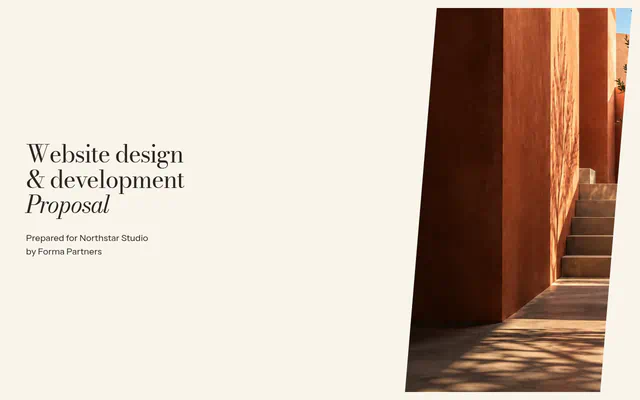
Website Design and Development Proposal
Website design and development proposal for a design studio, with a page plan, an eight-week timeline and three one-time options.
Free for 14 days. No card required.
Make this template yours
A clear structure
A starting point for the scope, pricing and next steps you want to share
Ready to edit
Keep useful sections and replace the content with your client details
Your brand
Choose the colors, fonts and imagery that fit your business
About this template
A web design proposal sets out what a new website will include, how it will be designed and built, when it will launch and what it costs. This template is a fixed-scope project with milestone payments, so it helps the client approve a defined sitemap, timeline and budget before any design work starts.
Who this template is for
Web designers, developers and small studios quoting a new marketing website or a rebuild of an existing one. The sample uses Webflow with five core page types and a reusable case-study template, but the structure works for any CMS. It is not built for online shops, member portals or custom integrations, which the template lists as out of scope.
What each section covers
- Introduction and Priorities
- Names the site’s primary action, the platform and the target launch, then frames the work around what visitors need: understanding the offer, evaluating the work and starting a conversation.
- Design Direction
- One visual language across pages, mobile designed alongside desktop, two consolidated review rounds, and approval of key layouts before development begins.
- Sitemap and Services
- The page types in scope, what the client supplies (approved copy, brand assets, permissions), an included delivery checklist with 30 days of in-scope defect support, and a clear out-of-scope list.
- Your Team and Client Reference
- Project, design and development leads plus the client reviewer, and one approved testimonial. Use only a reference you have permission to share.
- Timeline, Pricing and Next Steps
- Four milestones from brief to launch, each with a gate and a feedback turnaround dependency, then a one-time project fee, a milestone billing schedule and kickoff preparation.
How to price a website project
The template uses a fixed project fee split into three line items: content planning and responsive design, development and CMS setup, and launch checks and handover. Payment is staged across project booking, design approval and launch handover, so you are paid as each gate is passed rather than all at the end.
Keep running costs out of the project fee. Hosting, domains, platform subscriptions, paid fonts and asset licences are listed as paid separately, and ongoing maintenance is quoted as its own service. If the client wants copywriting or more pages, add them as priced items rather than absorbing them.
Before you send it
- Confirm who writes the copy
- Full copywriting is out of scope. If the client is supplying copy, set a date for it, because missing content holds up the build stage.
- Fix the page count
- List every page type in the sitemap. Additional pages are out of scope, so the client should see exactly what the fee covers.
- Check the feedback dependency
- The timeline assumes client feedback within three business days. If that is unrealistic for their team, adjust the timeline now rather than after a missed launch date.
- Line up the dates
- Make sure the offer expiry comes before the proposed start date and that the target launch matches the milestone plan.
What’s in the Website Design and Development Proposal
11 parts, in the order your client reads them. Every part is editable: keep what fits the job, rewrite the rest and add your own.
Introduction
Your best work of the last three years is in hotels, offices and restaurants, but your website still shows the house extensions you built in 2019.
Your situation
From your enquiry inbox and our review of the current site.
Our recommendation
Built in Webflow, so your team publishes new projects without us.
Covers: How the site will work
The new site
Three recent commercial projects and one line on what you do.
What is included
Everything the fixed fee covers, and what it does not.
Timeline
A workshop with the partners to agree the pages and the projects to show.
Your team
Has built websites for 30 architecture and design practices since 2015. The same three people work on your site from the workshop to launch.
Results for a similar client
An interior design studio, and its first quarter after launch.
Covers: The client, The result
Options and fees
Three options. We recommend Studio site.
Questions
We tell you in the first week which projects need new photos, and can recommend architectural photographers.
Next steps
Pick an option and any extras, then accept on this page.
Frequently Asked Questions
What should a website design proposal include?
The site’s goal and primary action, the platform, a sitemap of page types, the design and review process, what is and is not included, the team, a timeline with milestones, the project fee, a payment schedule and the running costs the client pays separately.
How many design revisions should a web design proposal include?
State a fixed number. This template plans two consolidated design review rounds and asks for key layouts to be approved before development. Consolidated means one combined set of feedback per round, which avoids conflicting comments from different stakeholders.
Should hosting and domains be included in a website quote?
Keep them separate so the client owns their accounts. This template lists hosting, domains, platform subscriptions, paid fonts and asset licences as costs paid separately, and treats ongoing maintenance as an optional, separately quoted service.
What support should a web designer offer after launch?
Say exactly what you give. This template includes 30 days of in-scope defect support after handover. Anything beyond fixing defects in the agreed scope, such as new features or regular updates, is ongoing maintenance and should be quoted separately.

Ready to make it yours?
Add your scope, pricing and brand. Preview the client experience before sharing.